
Uncovering India's Real Challenges and Solutions

Updated: Feb 3
With a population exceeding 1.4 billion, India is one of the world's fastest-growing economies. Yet, it has not fully tapped into its potential. Several major challenges hinder our progress. Understanding these issues is essential for crafting effective solutions to unlock India’s full potential.
Major Challenges Facing India
The primary challenges include:
Uninhabitable cities
Slow justice delivery
Voters choosing corrupt leaders over honest ones
An outdated education system
Limited product development
Minimal research and development
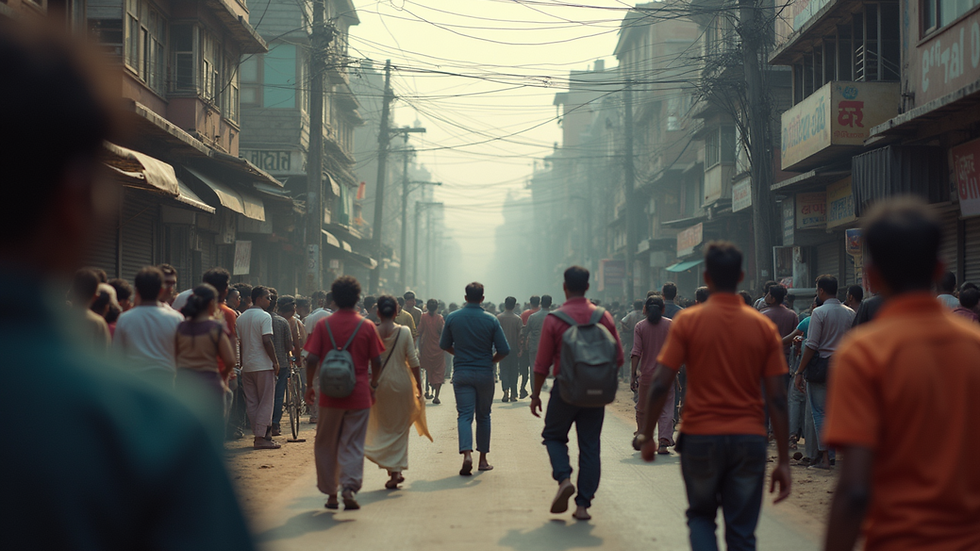
The most significant issue is that those responsible for making changes often complain, as if divine intervention will resolve the problems we've created. A former bureaucrat and Niti Ayog CEO notes, "Our cities are among the most polluted in the world. This isn't just about pollution. Indian cities face challenges with climate change, poor infrastructure, and weak public services. By 2036, over 600 million people will reside in Indian cities - our cities are not prepared for this growth. Roads are overcrowded, pollution is worsening, and essential services like water and sanitation are failing. Our cities are becoming unsafe and unlivable."
The Smart City Mission
Consider the Smart City Mission of India, initiated by PM Modi on 25 June 2015. A report from 2025 highlighted that the smart city projects overlooked ecological planning. They favored aesthetic or technological infrastructure at the expense of environmental resilience. Instances were reported of encroachment on wetlands, destruction of tree cover, and degradation of public commons. Rights groups have noted that low-income groups and informal settlements were frequently excluded from planning and benefit-sharing processes. Documented cases of displacement or threats of eviction associated with the project's development in various cities raise serious concerns.
Justice System Challenges
The fourth edition of the India Justice Report (IJR) 2025 highlights critical concerns across the four pillars of the justice system: judiciary, police, prisons, and legal aid. It reveals systemic deficiencies that have weakened India's justice system, making it slow and often unable to provide "justice" to the average citizen.
In theory, free competitive elections should prevent corrupt or criminal politicians from being elected. They should deter those in power from engaging in misconduct. However, India serves as an ideal case to explore why corrupt or criminal politicians succeed. Despite holding large democratic elections with multiple parties, voters frequently elect and re-elect candidates accused of criminal activities.

Education System Reform
Our current education system ranks poorly worldwide according to the 2026 education rankings. This system obstructs our advancement toward becoming a developed nation. It's time to stop blaming the colonial system and idealizing the Gurukul system. We must adopt the best global practices.
Key Factors for Improvement
We need to evaluate various factors, including:
Literacy rates
Student enrollment
Educational outcomes
Equity
Digital adaptability
The link between education and economic productivity
The 2026 rankings highlight a clear trend: countries investing in educators, technology, and inclusive strategies consistently rank high. In contrast, those viewing education as merely a financial burden are lagging. A significant trend is the development of education ecosystems where education sectors, industries, and governments collaborate closely.
Global Education Models
Finland leads in global education by focusing on minimal standardized testing.
Singapore is a model of academic excellence.
South Korea has made education central to its national identity, with reforms driven by concerns about student stress and mental well-being.
Japan excels in basic education and student discipline.
Canada stands out with high-quality, inclusive education.
Germany, the Netherlands, and Estonia excel due to strong vocational training, digital integration, and adaptable curricula. Estonia, in particular, has gained prominence through its commitment to digital-first education strategies.

Product Development and Innovation
For innovative product and service organizations, developing new product concepts is vital to new product development (NPD). This significantly impacts the product's ultimate success and reputation for quality and functionality.
Research Challenges
The research challenge lies in determining the best solution for selecting new product design concepts amid intense competition and limited resources. Analytical methods can help. This study primarily aims to create a comprehensive analytical approach that combines quality function deployment, the analytic hierarchy process, and data envelopment analysis. This approach enhances the effectiveness of product design decisions.

The Importance of R&D
Israel stands out by dedicating an impressive 5.56% of its GDP to R&D. This highlights its dynamic tech ecosystem and economy focused on innovation, while India allocates only 0.75% of its GDP to R&D. Countries prioritizing R&D investment often achieve a competitive edge in global markets. Substantial R&D spending fosters innovation, resulting in the creation of new products, technologies, and industries.
Bridging the Gap
For example, the innovation hubs in Israel and South Korea have become models for tech-driven economies. For India, increasing R&D investment can help bridge the technological and economic divide. R&D not only drives economic growth but also helps tackle critical issues such as healthcare, energy, and climate change.
Conclusion
India cannot achieve developed nation status without addressing the aforementioned primary challenges. We must make our cities livable and establish many new world-class cities. Our justice delivery system needs improvement to become effective and efficient. Voters should unite to defeat corrupt leaders and elect only honest and visionary candidates capable of transforming our country.
Additionally, we must reform the outdated education system. Industry leaders must invest significantly in new product development and research to become global leaders rather than imitating products and doing reverse engineering.
By embracing these changes, we can unlock India's full potential and pave the way for a brighter future.


Comments